Hymns · 1739
My God, (if I may call Thee mine)
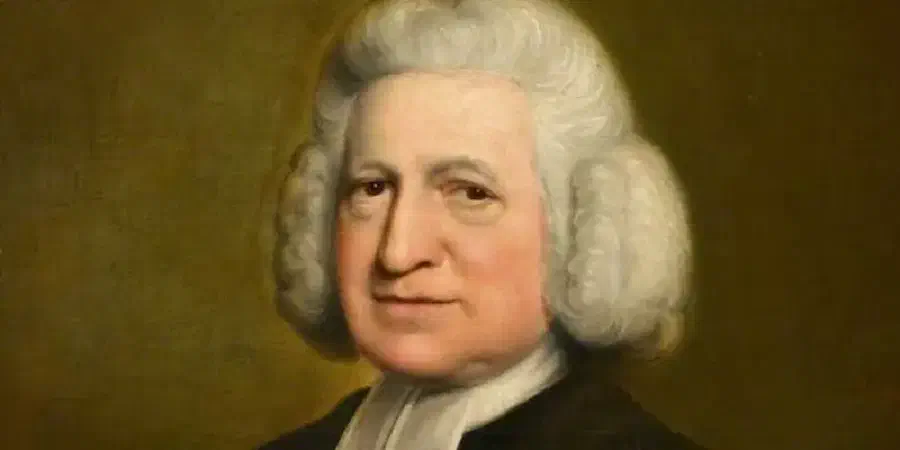
Songwriter Charles Wesley
Made popular by Charles Wesley, John Wesley
Details
Scripture connections
References
Verses this song directly draws fromAllusions
Verses this song echoes or alludes toLyrics
Verse 1
My God (if I may call thee mine
From heav’n and thee remov’d so far)
Draw nigh; thy pitying ear incline, (Ps. 17:6, Ps. 71:2, Ps. 88:2, Ps. 102:1-2, Isa. 37:17, Dan. 9:18, James 4:8)
And cast not out my languid pray’r. (John 6:37)
Gently the weak thou lov’st to lead, (Isa. 40:11)
Thou lov’st to prop the feeble knee, (Isa. 35:3, Heb. 12:12)
O break not then a bruised reed,
Nor quench the smoaking flax in me. (Isa. 42:3, Matt. 12:20)
Verse 2
Buried in sin, thy voice I hear,
And burst the barriers of my tomb,
In all the marks of death appear,
Forth at thy call, tho’ bound, I come. (John 5:25, John 11:43-44, Eph. 2:1, Col. 2:12-13)
Give me, O give me fully, Lord,
Thy resurrection’s pow’r to know; (Phil. 3:10)
Free me indeed; repeat[1] the word, (John 8:36)
And loose my bands, and let me go. (John 11:44)
Verse 3
Fain would I go to thee my God,
Thy mercies and my wants to tell: (Heb. 4:16)
I feel my pardon seal’d in blood; (Eph. 1:7)
Saviour, thy love I wait to feel.
Freed from the pow’r of cancel’d sin; (Rom. 6:18)
When shall my soul triumphant prove?
Why breaks not out the fire within
In flames of joy and praise and love?
Verse 4
When shall my eye affect my heart, (Lam. 3:51)
Sweetly dissolv’d in gracious tears?
Ah, Lord, the stone to flesh convert! (Ezek. 11:19, Ezek. 36:26)
And till thy lovely face appears,
Still may I at thy footstool keep, (Ps. 99:5, Luke 10:39)
And watch the smile of op’ning heav’n:
Much would I pray, and love, and weep;
I would; for I have much forgiv’n. (Luke 7:47)
Verse 5
Yet O! Ten thousand lusts remain, (I Pet. 2:11)
And vex my soul absolv’d from sin,
Still rebel nature strives to reign, (Rom. 6:12, Rom. 7:23, Gal. 5:17)
Still am I all unclean, unclean! (Lev. 13:45)
Assail’d by pride, allur’d by sense,
On earth the creatures court my stay;
False flatt’ring idols get ye hence, (Isa. 30:22, I John 5:21)
Created good be far away!
Verse 6
Jesu, to thee my soul aspires, (Ps. 42:1)
Jesu, to thee I plight my vows, (Ps. 116:14)
Keep me from earthly base desires,
My God, my Saviour, and my spouse. (Isa. 54:5, Isa. 62:5, II Cor. 11:2, Rev. 19:7)
Fountain of all-sufficient bliss, (II Cor. 9:8)
Thou art the good I seek below;
Fulness of joys in thee there is, (Ps. 16:11)
Without ’tis mis’ry all and woe.
Verse 7
Take this poor wandring, worthless heart,
Its wandrings all to thee are known, (Ps. 56:8)
May no false rival claim a part,
Nor sin disseize thee of thine own. (I Cor. 6:19-20)
Stir up thy interposing pow’r, (Ps. 80:2)
Save me from sin, from idols save, (Matt. 1:21)
Snatch me from fierce temptation’s hour, (Matt. 6:13, Rev. 3:10)
And hide, O hide me in the grave! (Job 14:13)
Verse 8
I know thou wilt accept me now, (Eph. 1:6)
I know my sins are now forgiv’n! (I John 1:9)
My head to death O let me bow, (John 19:30)
Nor keep my life, to lose my heav’n. (Matt. 16:25, Mark 8:35, Luke 9:24, John 12:25)
Far from this snare my soul remove,
This only cup I would decline,
I deprecate a creature-love, (Matt. 10:37)
O take me, to secure me thine.
Verse 9
Or if thy wiser will ordain
The trial, I would die to shun,
Welcome the strife, the grief, the pain, (Job 1:21)
Thy name be prais’d, thy will be done! (Matt. 6:10, Matt. 26:42, Luke 11:2, Acts 21:14)
I from thy hand the cup receive,
Meekly submit to thy decree,
Gladly for thee consent to live!
Thou, Lord, hast liv’d, hast died for me! (Rom. 14:8-9, II Cor. 5:15, Gal. 2:20)
[1] Wesley changed “repeat” to “pronounce” in 1739 but reverted to “repeat” in later editions.